
"coffee processing China"
9000 article(s) found

Flavor performance of Chinese-made coffee beans Yunnan coffee Katim tin card small-grain coffee beans
Professional coffee knowledge exchange more coffee bean information Please follow the coffee workshop (Wechat official account cafe_style) for a long time, domestic coffee beans from Yunnan have been sold back to China after being packaged and labelled by global coffee giants at low prices. The high quality and poor price of domestic coffee beans once again reflects that China's agricultural products have products and no products.

Semi-automatic Coffee Machine-the Development History of Yunnan Coffee
Semi-automatic Coffee Machine-the Development History of Coffee in Yunnan Province the main achievements in the development of coffee industry in Yunnan Province 1. Built the largest coffee bean production base in China by the end of 2011, the province's coffee planting area reached 450000 mu, put into production area of about 300000 mu, and produced about 40, 000 tons of raw coffee beans, accounting for 99.3% and 98.8% of the national coffee planting area and output, respectively, making it the largest coffee in the country.

Fruit bomb aricha African Coffee Ye Jia Xuefei China Coffee Trading Network
Origin: Gedeo Zone varieties: Typica and local native species treatment methods: Natural sensory description: honey-like tropical ripe fruit aroma, slightly taffy flavor Origin Summary: Gedeo Zone is located 4 kilometers west of Yecheville, planting elevation 1950-2100 meters, coffee from November to February of each year is sent to Kebel owned by Surafel Birhanu.
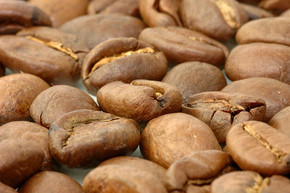
Introduction of Starbucks Yunnan coffee beans, the quality of Starbucks Yunnan coffee
Following Kaiping (official account vdailycom of Wechat) found that Starbucks opened a small shop of its own, Starbucks' first coffee bean from a single producing area in China, Starbucks Yunnan coffee beans, which went on sale simultaneously in all Starbucks stores in China on January 3, 2017. This coffee uses 100% of the high-quality Arabica beans grown in Yunnan and pours Starbucks' preference for preferred coffee.
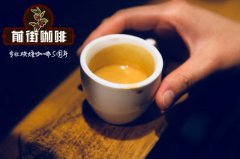
Introduction of roasting degree and flavor of small-grain coffee beans in Pu'er area of Yunnan Province, China
Professional coffee knowledge exchange more coffee bean information Please pay attention to the coffee workshop (Wechat official account cafe_style) thousands of years of tea culture has laid a solid foundation for the agricultural development of Pu'er in Yunnan. On this basis, the elegant manor made a breakthrough, established a unique coffee manor, and used cutting-edge experiments.
"China Tropical and Subtropical Rare Plant Base"
Strengthen scientific research and reasonable arrangement. It is suggested that in the process of implementing ecological coffee garden construction, increase the planting intensity of precious tree species and dominant tree species suitable for planting in coffee garden. In the process of implementing ecological transformation of existing coffee garden, organically combine ecological coffee garden construction with precious tree species planting, based on making Pu 'er a precious plant (rare timber) in tropical and subtropical regions of China.
How much coffee should Starbucks sell?
How much should a cup of Starbucks coffee cost? In the retail world of modern China, the prices of many imported goods are much higher than those of other countries.

Luckin coffee's new game of "infinite scene"-join hands with China Unicom to open cross-border business hall stores
Professional coffee knowledge exchange more coffee bean information please follow the coffee workshop (Wechat official account cafe_style) October 29, Jinan Quancheng Road 77 building China Unicom business hall ushered in the new retail professional coffee operator luckin coffee (Luckin Coffee) to settle down. At this point, Luckin Coffee, who takes the infinite scene (Any Moment) as the brand strategy, continues to be in the Imperial Palace.

Which province is the main province of Chinese coffee? Chinese coffee brands rank in Chinese coffee producing areas.
Professional coffee knowledge exchange more information about coffee beans Please follow the coffee workshop (Wechat official account cafe_style) Coffee production in China began on a small scale in the late 19th century. It expanded in the 1960s, but it wasn't really valued until the 1980s. In the 1980s, the Chinese government, the United Nations and a multinational coffee roasting company invested in new cultivation and processing

Nestl é expands the scale of purchasing coffee beans in China and is optimistic about the Chinese market.
Yunnan Pu'er is an important planting base of Nestle Coffee, and the settlement of Nestle Coffee Center seems reasonable. Statistics show that there are about 123000 farmers in Yunnan, planting an area of about 124000 hectares of coffee, while the annual output of raw coffee beans is 70, 000 to 100000 tons. The Nestle Coffee Center, completed on March 23 in Pu'er City, covers an area of 30,000 square meters. According to the project planning, the central planning

Is Jamaica coffee expensive? Can you buy authentic Jamaica Blue Mountain coffee in China?
Professional coffee knowledge exchange More coffee bean information Please pay attention to coffee workshop (Weixin Official Accounts cafe_style) Most people know that the price of a cup of real Jamaica coffee blue mountain coffee should be in three figures, but do you know that not all blue mountain beans can brew the flavor that Jamaica blue mountain coffee should have? Because authentic Jamaica Blue Mountain coffee flavor is beans and cheese

Feng Yue, a fallen official in Chongqing, could have become the boss of China's coffee trade, China's coffee dream
Professional coffee knowledge exchange More coffee bean information Please pay attention to coffee workshop (Weixin Official Accounts cafe_style) Chongqing fallen official Feng Yue: Former party secretary of Chongqing City Energy Investment Group yesterday afternoon (28 th), Chongqing City Commission for Discipline Inspection Chongqing City Supervision Committee on its official website released news. Official information refers to: former party secretary of Chongqing City Energy Investment Group Co., Ltd.,

With the ice and fire of the coffee market, various brands have taken various measures to seek a breakthrough.
This is also one of the main reasons for the bottleneck of China's coffee market. What Chinese consumers need is the taste of freshly ground coffee, but it is best to have the convenience of instant coffee. After all, it is quite extravagant for most consumers to drink a cup of freshly ground coffee with a price of about 30 yuan in an upscale coffee shop. Wu Jiahang told reporters that high-grade freeze-dried coffee is currently the strongest coffee category in the Chinese market.
More than half of the coffee shops in China do not make money from coffee.
A few days ago, a "profiteering door" news that the price of Starbucks coffee in the Chinese market is fully higher than that in the United States, causing widespread debate in the society. There are doubts that Starbucks' differential pricing is contrary to the principle of fairness, but there is also a view that calculating only the cost of raw materials while ignoring other operating costs obviously lacks economic common sense, coffee belongs to a non-monopoly industry, and its pricing power should be vested in the market and
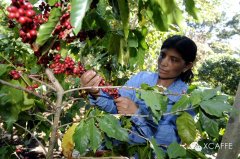
Taiwan, China, low-yield, boutique coffee beans, Asian flavor coffee, Taiwan cafe, Taiwan coffee.
When it comes to Asian coffee, the first impression of coffee lovers is often calm and calm. Asian coffee is generally characterized by thick flavor, strong sweetness and round taste, but slightly flat aroma and brightness. It is precisely because of the heavy nature of Asian coffee that it is very suitable to be used as a base when making Italian coffee. Raw coffee beans in Asia are generally processed by wet or semi-wet methods.
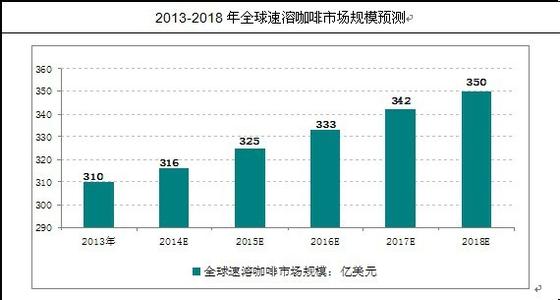
The prospect of the huge coffee market has attracted the covet of many foreign brands.
It is believed that the next 10 years will be an explosive period. At present, whether it is coffee consumption or coffee cultivation, China's industry position appears to be a bit awkward. A reporter from the Daily Economic News previously reported that as a producing area, the output of coffee beans in China is limited, accounting for less than 1% of the world's coffee consumption. Jia Benzhi, senior analyst of coffee industry at Kunming Fumin Import and Export Co., Ltd.

More than half of the coffee shops in China do not make money from coffee.
A few days ago, a piece of news that the price of Starbucks coffee in the Chinese market is fully more expensive than that of the United States, causing widespread debate in the society. There are doubts that Starbucks' differential pricing is contrary to the principle of fairness, but there is also a view that calculating only the cost of raw materials while ignoring other operating costs obviously lacks economic common sense. Coffee belongs to a non-monopoly industry, and its pricing power should be vested in the market and enterprises.
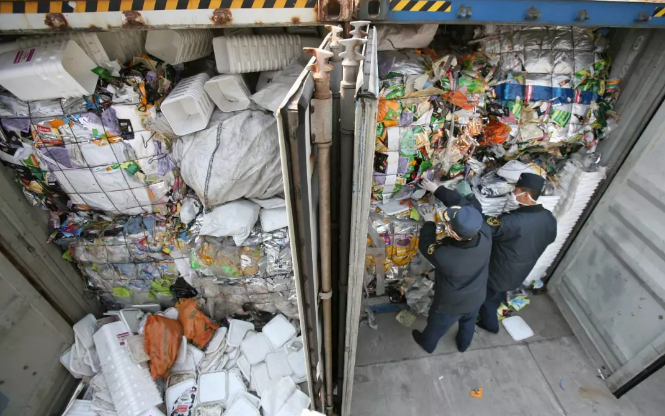
No foreign trash! Starbucks paper cups face garbage disposal crisis, China no longer accepts foreign garbage
Professional coffee knowledge exchange More coffee bean information Please pay attention to coffee workshop (Weixin Official Accounts cafe_style) A cruise ship loaded with thousands of tons of solid waste, sailing from a dock in a certain country, sailing to the high seas to trade with people, and then landing at the port of our country, through false reporting, concealment, hiding and other ways to avoid customs supervision, or directly bypass customs, that is, bypass customs into the country privately. ever
Coffee experience Coffee contact process of Chinese people
Speaking of my first contact with coffee, I'm afraid I have to talk about it since I was a child. From the beginning of my learning, I remember that my mother would make this cup of black water. My mother grew up in East Africa, the birthplace of coffee, and didn't come back to China until she was a teenager. Coupled with the fact that my father stayed abroad when he was young, their combination made the family have a habit of drinking coffee all the time. When we were young, our mother made us milk.

Foreign coffee brand China Enclosure Silicon Valley newcomer Wheelys wants to challenge Starbucks
Compared with the global average growth rate of 2%, China's coffee consumption is growing in double digits, and the huge market prospect has attracted the covet of many foreign brands. According to local media in Shanghai, Wheelys, a coffee brand from Sweden with the Silicon Valley incubation label, has announced plans to expand in the domestic market and intends to set up an industrial fund to promote the development of city operators.